At Precede, we’re passionate about ensuring developers are supported when they make more sustainable decisions. One of the primary ways we do this is through our Green Loan product, which offers financial incentives to encourage the adoption of green building practices and the achievement of ambitious ESG targets.
In January 2024, we were able to deploy this product for the first time, when we delivered a £105.2m Green Loan to fund the development of Enclave Acton, a modular construction project with exceptionally strong sustainability credentials.
But, to date, that’s the only Green Loan we’ve executed. Given that we’ve invested over £2bn over the past four years, it’s clear to see that Green Loans account for a very small percentage of this total lending volume.
To be clear, this doesn’t mean that the developments we finance aren’t sustainable. As I’ve touched on before, we have embedded social and environmental values into our business strategy. We continue to prioritise assets and borrowers with excellent sustainability credentials. But often that doesn’t translate into demand for a Green Loan product. Nor is this experience unique to us. Speaking with other lenders at events recently, it’s clear that, across the market, the uptake for Green Loans is not where we want it to be.
Our experience indicates that, while there is a growing acknowledgement of climate objectives and a widespread understanding of the built environment’s crucial role in achieving these goals, borrowers often encounter practical challenges when attempting to deliver green or certified buildings. Foremost among these challenges are the considerable costs associated with sustainable development, which can act as a deterrent even for those committed to achieving positive environmental outcomes.
Many developers, despite their desire to make a meaningful contribution to environmental improvements, are restricted by financial pressures. The investment necessary to implement sustainable building practices and secure certifications is frequently prohibitive. Consequently, borrowers may struggle to prioritise or reach green standards within their projects. Immediate financial concerns often take precedence, resulting in certified sustainable buildings being deprioritised in favour of more conventional approaches.
In addition to financial considerations, the commitments tied to key performance indicators (KPIs), ongoing monitoring, and reporting requirements inherent in green loans impose a significant administrative and compliance burden. Developers must also contend with the risk that, should an asset not meet the agreed ESG targets, incentives may be withdrawn or penalties imposed. This further complicates decision-making for borrowers.
Given the current climate—characterised by long-term macroeconomic uncertainty, supply chain disruptions, and escalating labour and material costs—it is understandable that developers might opt for a more cautious approach. Many choose conventional loans, which are familiar and do not carry the additional costs and complexities associated with green financing. This pragmatic strategy reflects the challenge of reconciling sustainability ambitions with the practical realities of delivering viable projects in a demanding economic landscape.
Our process
So, how exactly do we support the creation of a more sustainable built environment if demand for Green Loans is subdued?
A pragmatic approach is key. While we can’t make every loan a green one, what we and other lenders can do is ensure every financing we provide goes some way towards contributing to a more sustainable future.
The key to achieving this is comprehensive screening.
At Precede, every loan we provide is screened and evaluated against stringent ESG criteria. Our process involves the following steps:
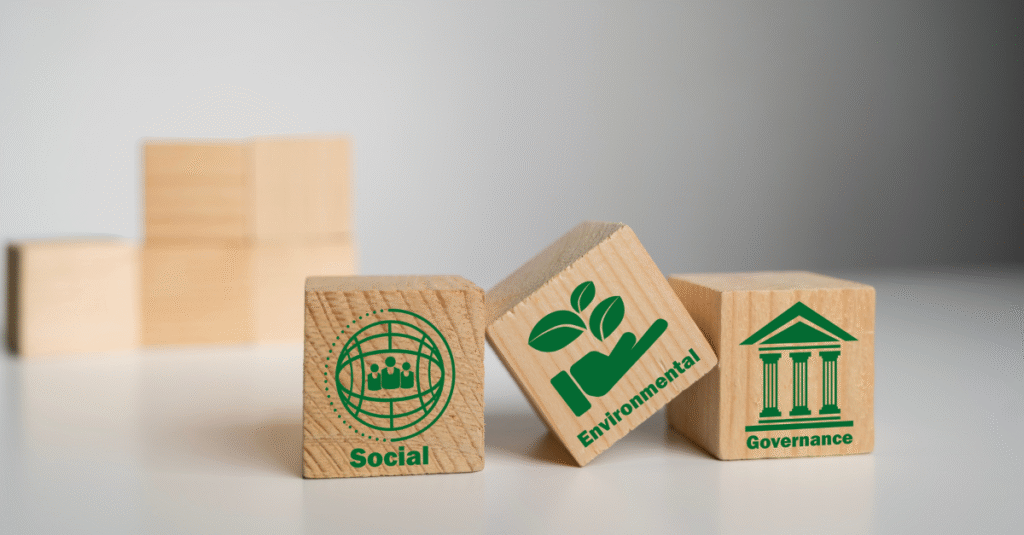
- Scorecard assessment: Every loan application we receive is evaluated using bespoke underwriting scorecards that assess the project’s performance across three key areas: good governance practices; environmental KPIs and building sustainability; and social value creation.
- Collaboration with Longevity Partners: Longevity, who we’ve worked closely with for years, provide expert advice and support throughout the screening process, helping us to evaluate projects against our sustainability framework and identify potential ESG risks and opportunities.
- Feedback and future-proofing: We share the screening results with our borrowers, providing valuable insights and recommendations to help them improve their ESG performance and future-proof their assets against climate risk and evolving regulations. We also produce ESG reports for our investors so that they can assess the relevant loan asset against their own sustainability criteria.
We do this not to complicate borrowers’ lives, but to help them future-proof their assets against regulatory shifts and rising climate risk. By assessing factors such as energy efficiency, biodiversity impact, community engagement and governance, we’re able to identify potential red flags early and work collaboratively to address them.
It’s a process which benefits both parties. For borrowers, it leaves them well-placed to meet the expectations of planners, investors and tenants in an increasingly sustainability-conscious world. For us, it ensures we’re backing projects that will remain viable under future regulations.
The importance of pragmatism
Pragmatism is often derided by climate change experts. It’s a sentiment I understand to an extent – the recent news that humanity has failed to limit global heating to 1.5 °C was a depressing reminder that we are moving far too slowly to address the climate crisis.
However, we have to start somewhere and recognise that we are operating in a complex industry where sustainability is one of many competing priorities.
I’m optimistic that as borrowers become more familiar with green loan products, uptake will increase. But right now, screening is the single most effective tool we have.
The onus is firmly on us as lenders to make robust screening standard practice across our industry. If we do, then developments that ignore environmental or social considerations will quickly become a thing of the past, and both people and the planet will benefit.